Alpine A290 GTS: the electric car with a Sports Car complex | CarDynamics
ElettricoTest Drive
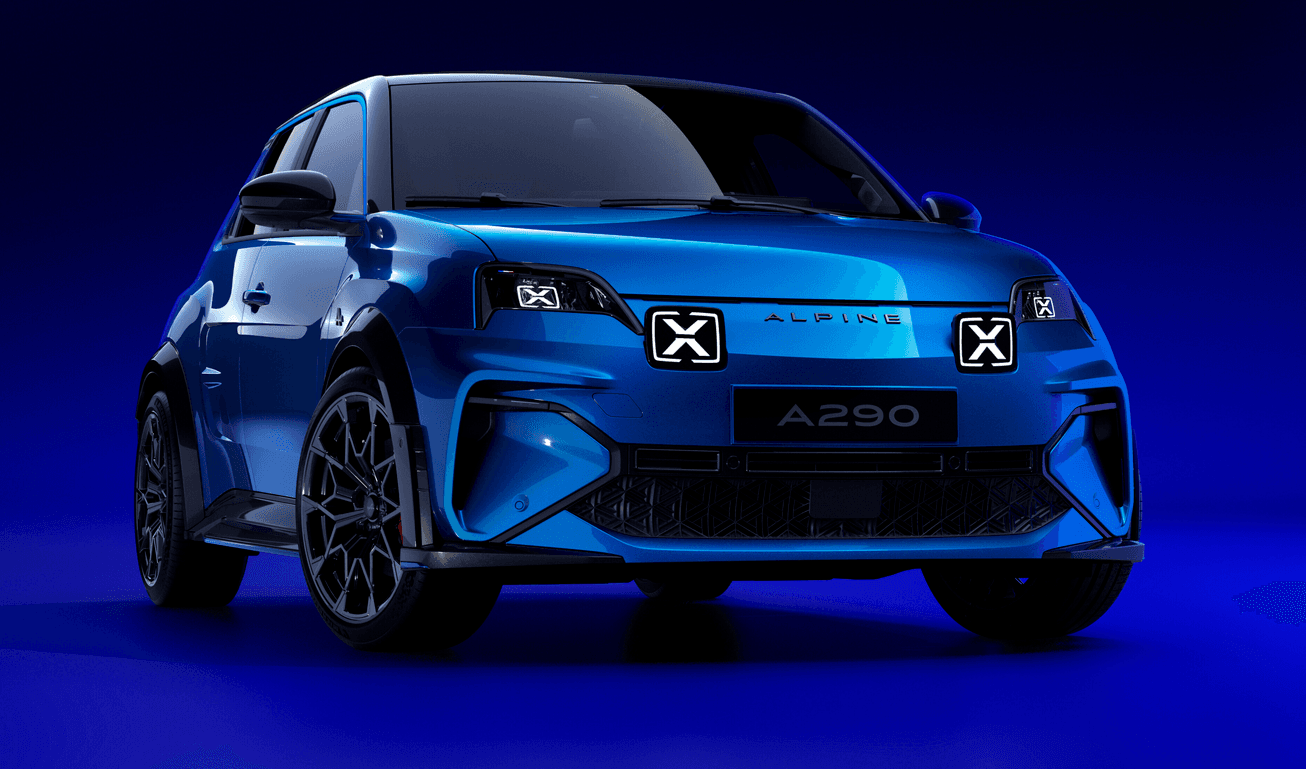
Alpine A290 GTS: the electric car with a Sports Car complex
The corners arrive. One after another. And the A290 GTS tackles them as if they had been designed specifically for it
Lorenzo Pollini · 8/24/2026 · 5 views
Covering almost 1,000 km in a week in an electric car means facing a test of maturity that, personally, I’m still not sure I’ve completely passed: range anxiety. A feeling which, as far as I’m concerned, comes just after the fear of suddenly discovering that I can no longer eat pizza and ice cream.
After all, I had already experienced the thrill of charging first-hand. With another EV some time ago, instead of sensibly stopping at a charging point, I decided to turn the journey into a scientific experiment. 10%, 7%, 5% and then that glorious 4% state of charge, reached just as the car was probably starting to wonder why its owner hated it so much.
With the Alpine A290 GTS, the situation isn’t all that different. The range quoted by the manufacturer belongs to that wonderful theoretical world in which consumption, temperature and traffic apparently don’t exist. In my own use, consisting of urban driving, country roads and a few longer journeys, I managed to cover around 280 km before having to look for a socket.
The blame, at least partly, lies with the 52 kWh battery. A capacity that already tells you a lot about the A290 GTS’s philosophy: rather than a car designed to devour miles, it is a sporty hatchback that wants to have fun from one corner to the next. Of course, a few extra kWh would allow you to travel further, but that would add to the overall weight. And when you already have a car that manages to outweigh a Mk8 Golf, adding even more mass would hardly be the best way to preserve the lightness Alpine wants to convey.
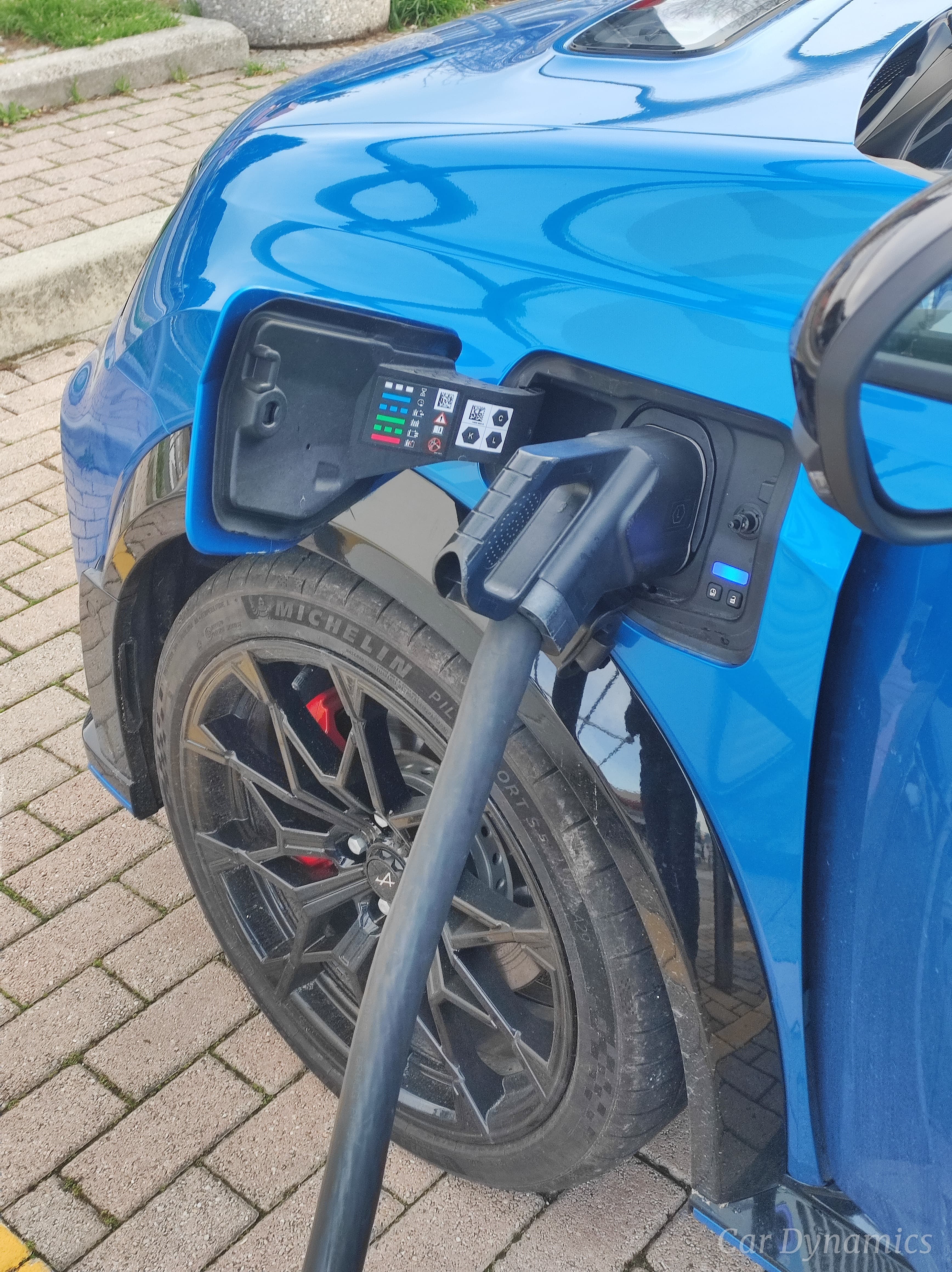
Charging isn’t exactly its strongest suit either. Using a DC fast charger, it takes around 20–25 minutes to reach 80%, which is still a long way from the speed at which you can fill up a conventional car. Unless, of course, you have a home wallbox and start every morning with a fully charged battery.
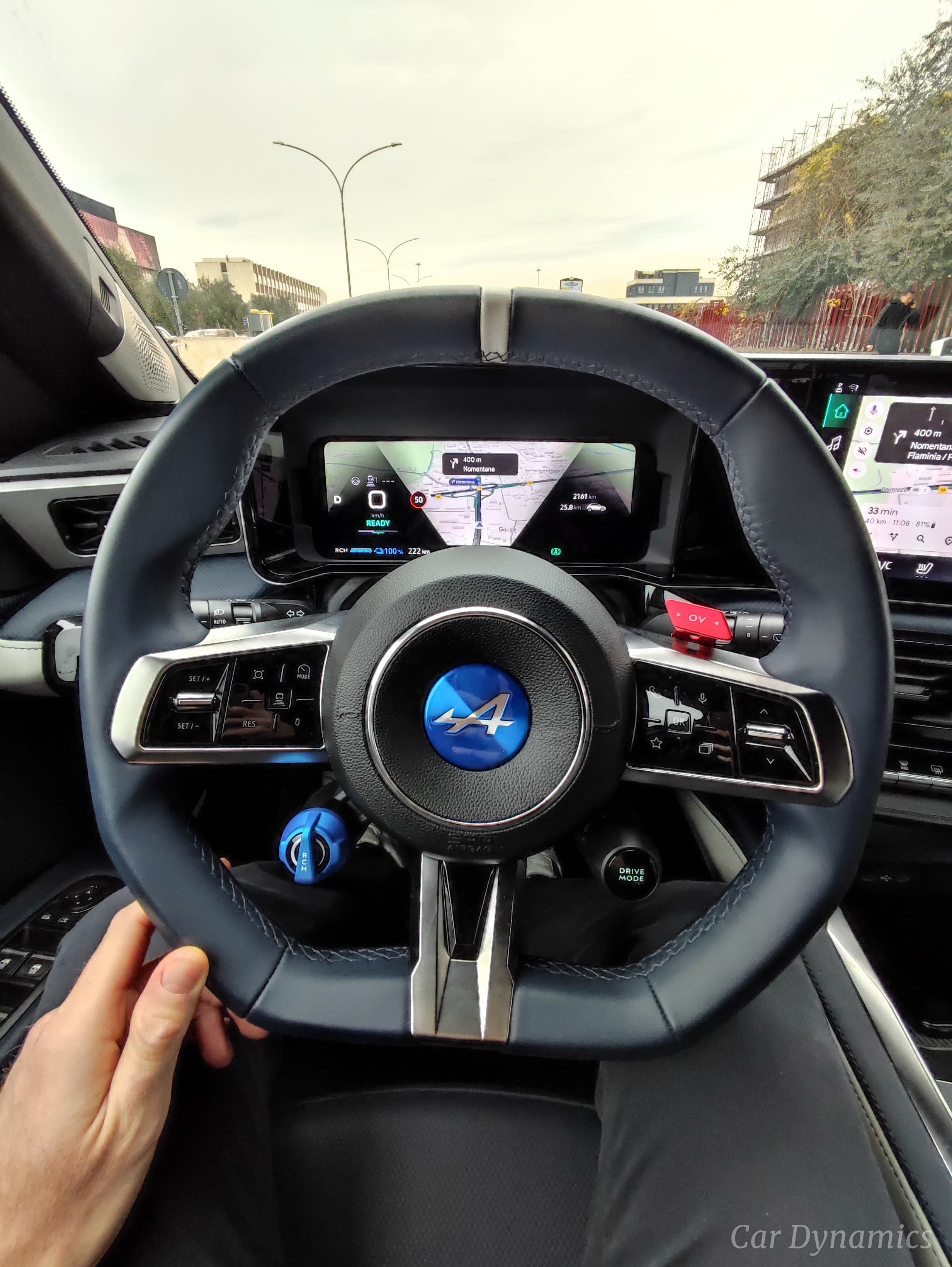
But then you open the door, sit down and look at that steering wheel, and this is where the A290 GTS starts playing a different game.
The driving position immediately puts you in the right frame of mind: hands on the wheel, road ahead and that strange feeling that the car is simply waiting for you to give it permission to go. Then the corners arrive. One after another. And the A290 GTS tackles them almost as if they had been designed specifically for it.
There is no four-cylinder engine filling the cabin with noise, but rather a dance of silence, tyres and the occasional electric whine. The low centre of gravity, courtesy of the batteries, helps keep body roll in check and delivers a sense of agility that, given the car’s weight, is anything but guaranteed.
And then there’s that red button on the steering wheel.
Press it and the A290 GTS pulls a small ace from its sleeve for a few moments, delivering a temporary boost that feels as though it was designed specifically to launch you out of a corner. The trick is knowing when to use it. Wasting it on a straight is almost sacrilegious: the perfect moment is just after you’ve clipped the apex and want to turn the exit of the corner into something considerably more vicious.
It isn’t all perfect, though.
The slightly raised driving position feels a little at odds with what the A290 GTS promises to be. It isn’t low enough to make you feel truly immersed in the car and, given its explicitly sporty character, I was expecting something different.
Then you look down and find that little blue dial on the steering wheel, used to control regenerative braking. Suddenly, your mind starts wandering: paddocks, hot tyres, drivers arguing over compounds and engineers making last-minute decisions about which strategy to use. Your body is sitting in a compact electric car. Your mind, meanwhile, is already on the starting grid.
One of the things the A290 demonstrates best, however, is its ability to get around town. This is where it feels completely at home: compact dimensions, a good turning circle and an ease of driving that makes it perfectly manageable even in Rome’s traffic.
It is precisely in everyday use, though, that some less convincing decisions become apparent. Alpine has devoted considerable attention to the sporty side of the car, perhaps leaving a few practical details on the back burner. The coat hooks on the rear pillars, for example, are missing. And you’ll notice that precisely on the day you’re running late to pick up your shirts from the dry cleaner.
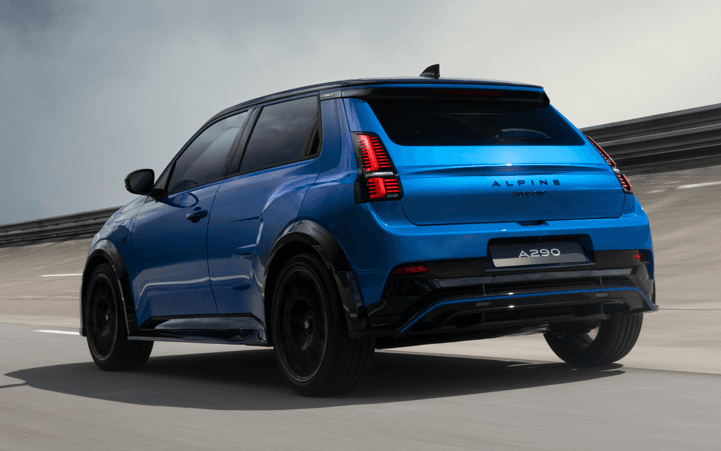
The rear doors and the boot, partly sacrificed to make room for the mechanical components and batteries, are another reminder that practicality was not exactly priority number one here.
And then there’s the motorway.
The absence of the familiar noise of an internal-combustion engine makes aerodynamic noise and tyre roar even more noticeable. Sound insulation is therefore not one of its strengths and, after a few hours on the road, the cabin can become considerably noisier than you might expect from a car at this price point.
Yes, the price. Because to get an Alpine A290 GTS capable of accelerating from 0 to 62 mph in 6.4 seconds, you need to put around €45,000 on the table. Not exactly what I would call a democratic price.