AutoTest Drive
When the road comes alive: driving the Mazda MX-5
Brake, downshift, let the car dance into the corner, then get back on the throttle. The engine climbs through the rev range, the soundtrack becomes more intense and the rear end lightens just enough to remind you that beneath that apparently innocent bodywork lies a true dancer
Lorenzo Pollini · 8/24/2026 · 7 views
Some cars seem to have been built to be driven; others, more simply, make you want to drive. The Mazda MX-5 undoubtedly belongs to the latter category.
To truly understand it, all you need is a crisp autumn day, a mountain road and the traffic disappearing in the rear-view mirror. A ribbon of asphalt winding through the mountains of Abruzzo, three friends, an MX-5 roadster and a horse-powered Alfa Romeo Giulia: it is hard to imagine better ingredients for an adrenaline-filled Sunday.
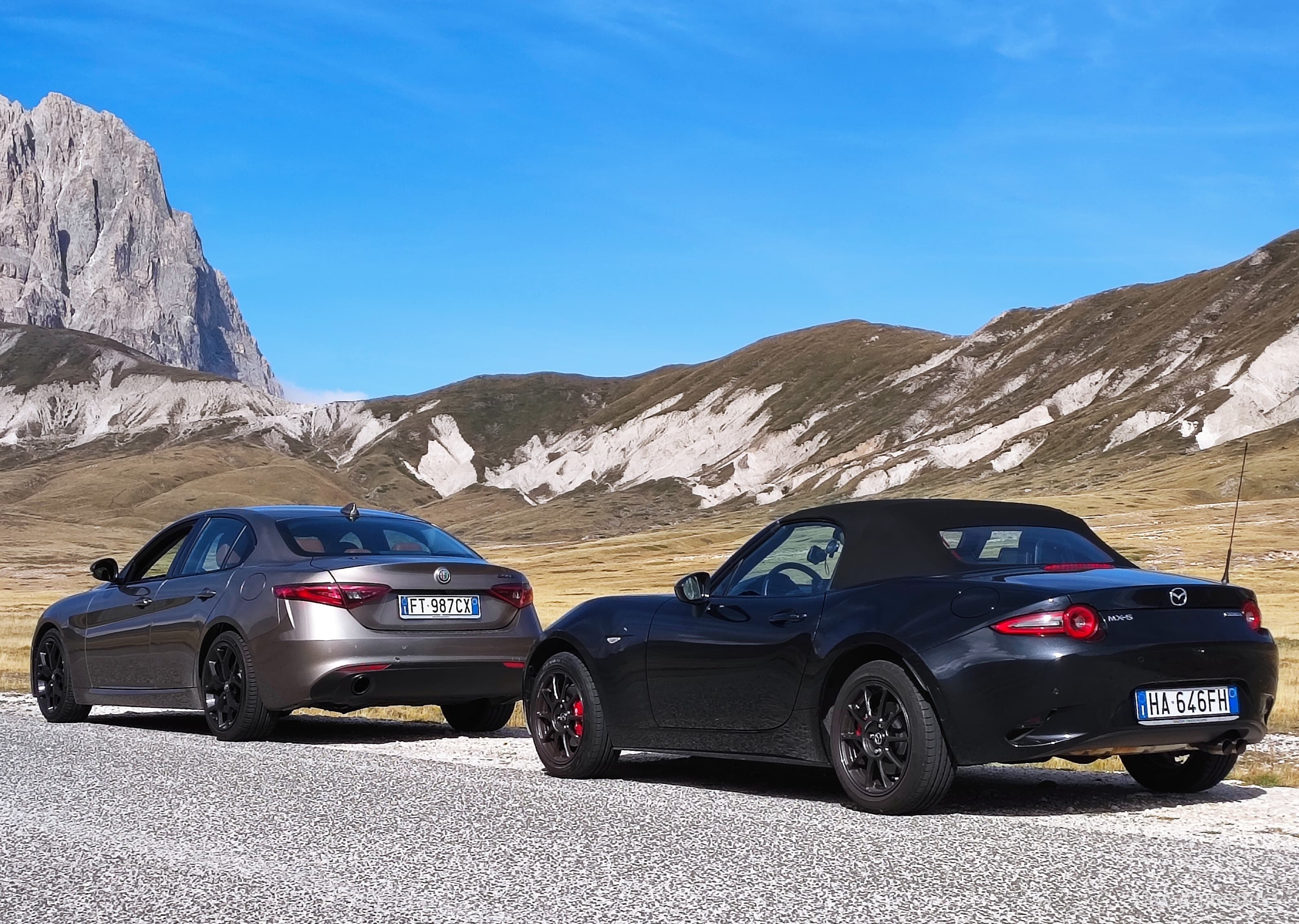
The little Japanese roadster proves surprisingly pleasant in everyday use. Granted, the idea of taking it on a punishing trip to Ikea requires a fair dose of optimism and, if you have a large family, there are probably more (ir)rational alternatives – a BMW M3 Touring or an Audi RS6, for example. Yet it is when the hairpins begin to appear that the little Mazda finally seems to find its natural habitat.
A slight movement of the steering wheel is all it takes for the MX-5 to change direction with disarming ease. The car responds instantly to every input, while the manual gearbox soon becomes an essential part of the experience: short, precise shifts with an almost mechanical sense of satisfaction.
First gear, second gear, and the hairpin approaches. Brake, downshift, let the car dance into the corner, then get back on the throttle. The engine climbs through the rev range, the soundtrack becomes more intense and the rear end lightens just enough to remind you that beneath that apparently innocent bodywork lies a true dancer.
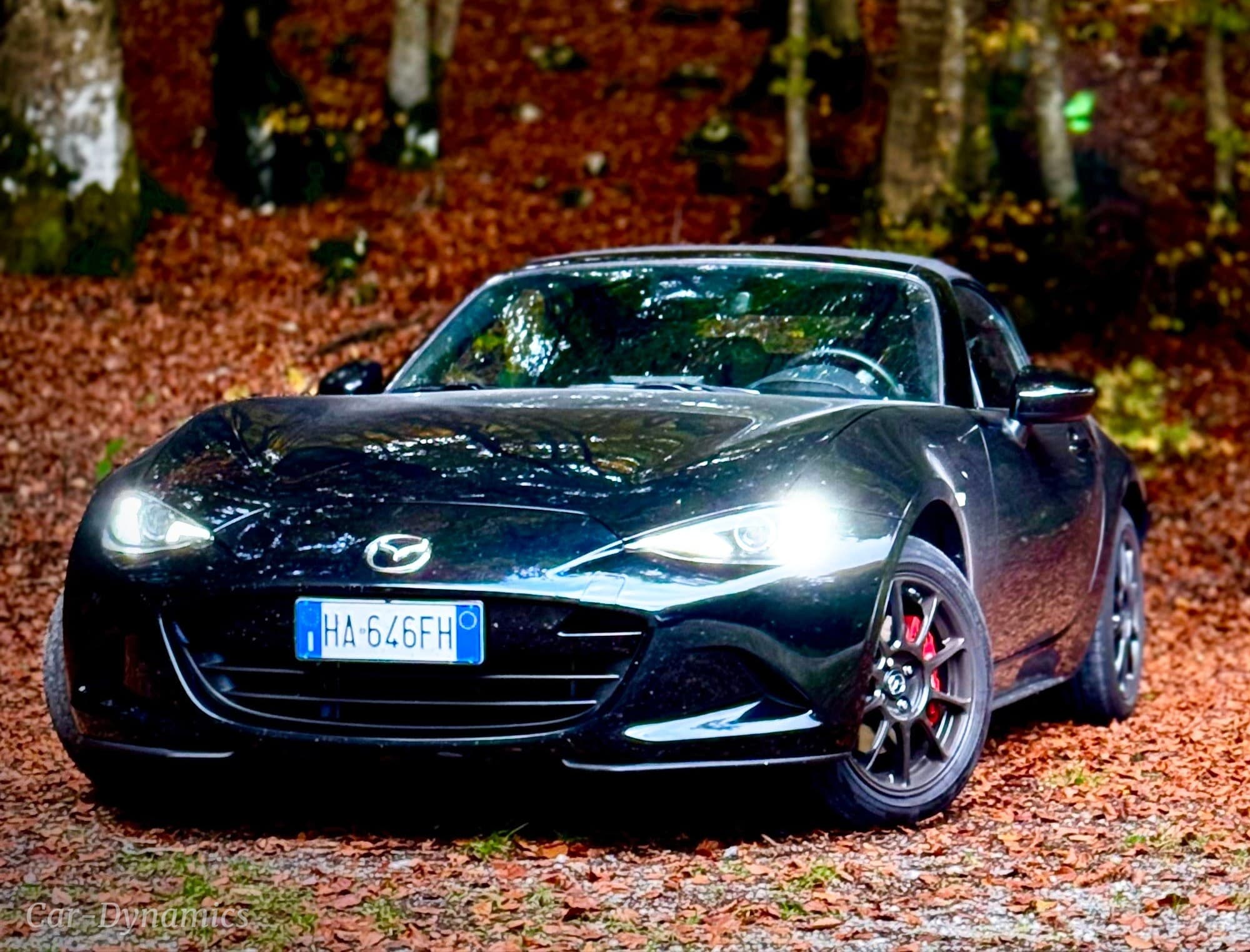
132 hp may not sound like much, but in a car this light they are more than enough to have fun without reaching absurd speeds. Even with the electronic aids relaxed in Track mode, the MX-5 remains predictable and progressive: it involves you, but rarely intimidates you.
There are, however, a few limitations.
The 1.5-litre Skyactiv-G inevitably lacks some low-end torque, particularly when the road climbs and hairpins come one after another. And it is precisely in those moments that a question naturally arises: what could this same car do with the 184 hp 2.0-litre engine?
It would be an interesting answer to discover, especially considering that the Homura trim, with its more focused character, almost seems to call for a powertrain capable of fully exploiting its potential.
The engine note, the driving position set almost at ground level and that wonderfully precise gearbox nevertheless make you forget quite a lot. Including the fact that, on warmer days, the cabin can quickly turn into a small sauna. Or that some interior plastics do not exactly belong in a car approaching the €40,000 mark. Not to mention the virtually non-existent storage spaces, the less-than-perfect visibility and brakes that, at least in my experience, did not always inspire complete confidence under heavy braking.
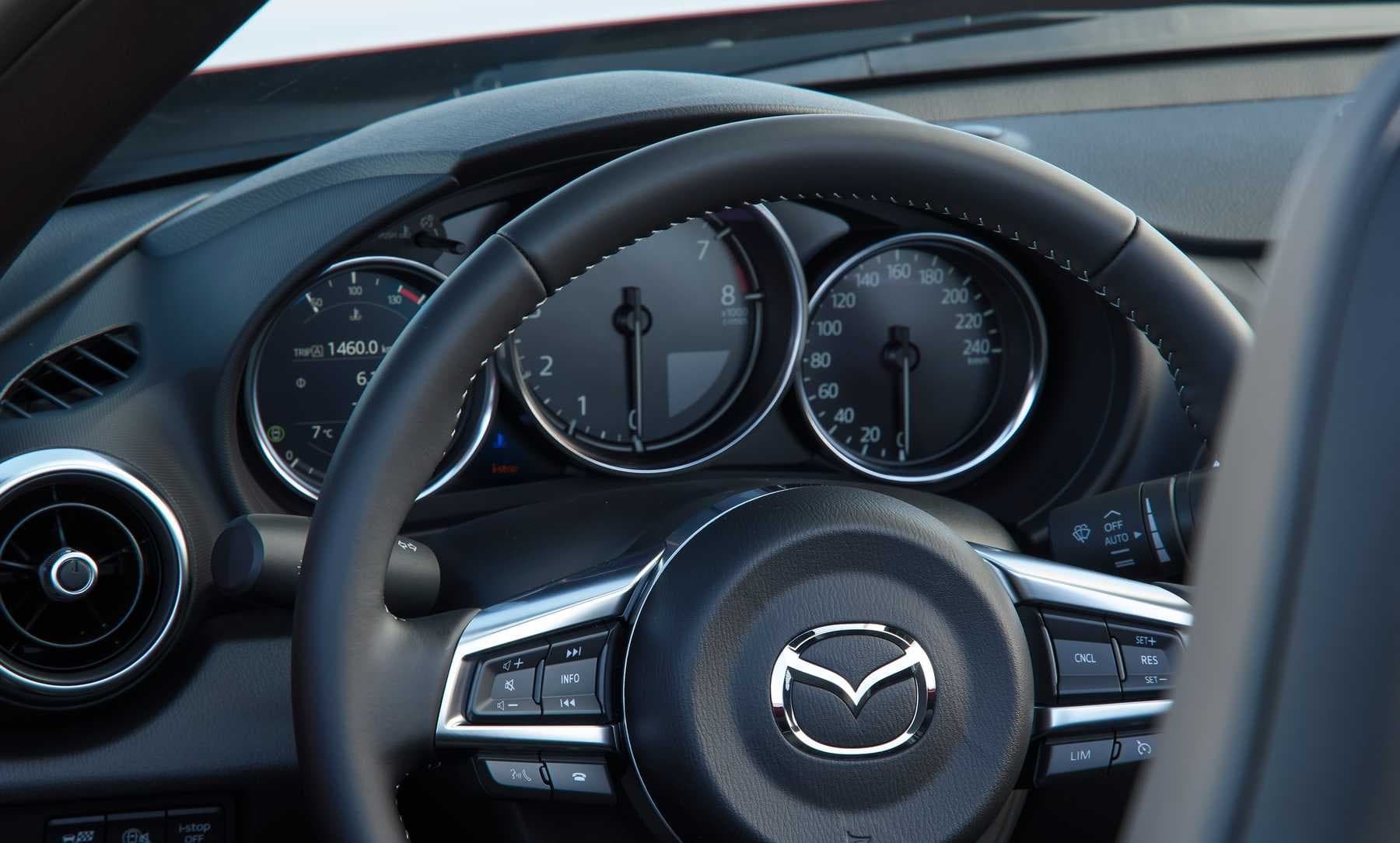
And yet, it only takes a few more corners for those thoughts to fade into the background.
Because looking at it feels good. Driving it feels even better.
The MX-5 is not perfect, and perhaps it does not want to be. But in an automotive world increasingly shaped by technology, weight and layers of electronics, it remains a rare exception: a car that does not need extraordinary speed to remind you how beautiful it can be to simply drive.
- Mazda
- MX-5
- Homura
- Jinba Ittai
- Roadster